7 Steps to Start Day Trading From Scratch Without Guesswork
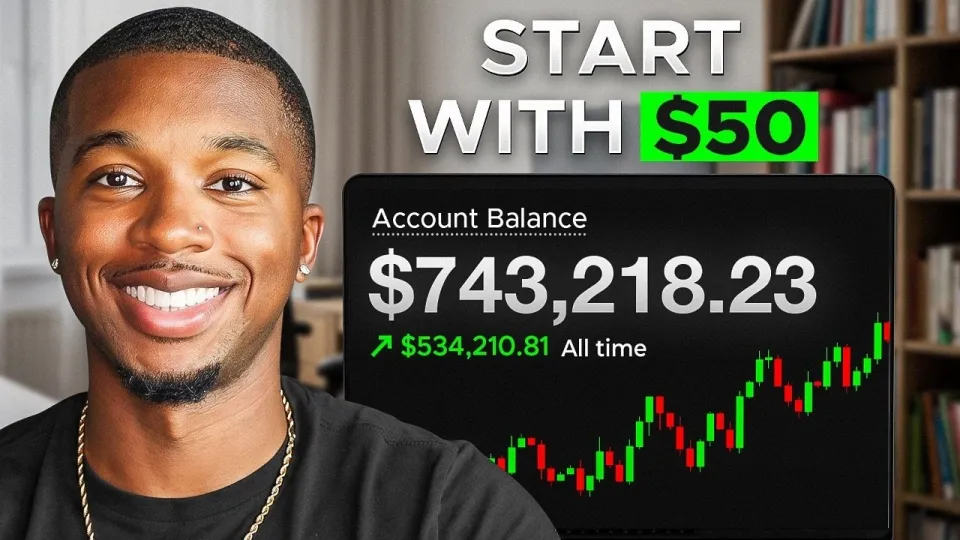
Video: Easiest Way To Start Day Trading From Scratch (Exactly What I Did)
You can order the same kind of articles for your own video to boost it on YouTube and Google. Just message the Telegram bot @sat_sit_bot. The bot writes and publishes the articles itself (with your YouTube video embedded) on popular topical websites (no ads). Free trial — 50 articles.
· based on the channel Jooviers Gems
Day trading from scratch means learning four things in order: how price moves on a chart, how to read a candlestick, how to control risk per trade, and how to practice on a demo account before funding anything. You do not need a large account, a degree, or years of screen time to start — you need a repeatable process and the patience to test it. The breakdown below follows the same path the Jooviers Gems video walks through, and you can follow the trades and course material behind it through the Inner Circle membership.
Step 1: Understand what day trading actually is
Day trading is the practice of opening and closing a position within the same trading day, so no risk is carried overnight. That single rule separates it from swing trading and investing, and it is the reason day traders watch short timeframes — usually one-minute, five-minute and fifteen-minute charts — instead of weekly ones.
Two markets dominate beginner content: stocks and futures on the US side, and forex plus indices on the funded-account side. Futures contracts such as the micro S&P 500 (MES) and micro Nasdaq (MNQ) are popular with small accounts because margin requirements are low and the instruments trade nearly around the clock. Forex pairs like EUR/USD work the same way through a broker. What matters at the start is not which market you pick, but that you pick one and stop switching.
Step 2: Learn to read a candlestick before anything else
A candlestick packs four prices into one shape: the open, the high, the low and the close. The body is the distance between open and close, and the thin lines above and below — the wicks — mark the extremes reached during that period.
Reading them is simpler than it looks:
- A long green body means buyers controlled the period and price closed well above the open.
- A long red body means sellers controlled it and price closed below the open.
- A long lower wick shows price was pushed down and then bought back up — rejection of lower prices.
- A long upper wick shows the opposite: buyers tried, sellers took over.
This is the part beginners skip, and it is the part that makes every later strategy readable. If you cannot describe what the last five candles did, no indicator will save the trade.
Step 3: Pick one simple setup and one timeframe
A setup is the exact condition that tells you to enter. Beginners who lose money usually trade five setups badly instead of one setup well. A workable starter setup looks like this: a clear directional move, a pullback into a level, and a candle that closes back in the direction of the trend.
Keep the checklist short enough to memorize. If your entry rules need a paragraph, they are too complex for a beginner account. Write the rules down, and treat anything outside those rules as a no-trade day.
Step 4: Size every position around a fixed risk number
Risk management, not prediction, is what keeps a beginner alive. Decide before the session what a losing trade costs you — commonly 1% of the account or a fixed dollar amount on a small account — and let the stop-loss distance determine the position size, not the other way around.
A practical sequence: find the entry, place the stop where the idea is proven wrong, measure the distance in points or pips, then calculate how many contracts or lots keep the loss at your fixed number. If the required size feels uncomfortable, the trade is too big, not the market too slow. This one habit separates traders who survive their first year from those who blow an account in a month.
Step 5: Practice on a demo account and backtest before going live
Demo trading and backtesting are where the strategy gets tested without tuition fees. Backtesting means scrolling back through historical charts and marking every valid setup by hand, logging what happened next. Demo trading means executing those same rules in real time with fake money.
Give it real time — weeks at minimum, and many beginners need a few months. One trader in the comments of the video described almost a month of demo trading and backtesting before feeling on track, with results measured in process rather than profit. That is the correct order: rules, then repetition, then money.
Step 6: Consider prop firm funding instead of a big personal account
A prop firm gives you access to the firm's capital after you pass an evaluation, which means a beginner with a few hundred dollars can trade a funded account far larger than their savings. The trade-off is rules: daily loss limits, a maximum overall drawdown, and often a profit target to pass.
Before paying any evaluation fee, read the drawdown terms carefully, because a trailing drawdown behaves very differently from a static one. The channel behind this breakdown points beginners toward The Edge Funder at https://www.theedgefunder.com/ for instant funding, and there is a Discord community at https://discord.gg/WpJXHKK7f2 where funded traders compare setups and rules. Neither replaces practice — funding amplifies whatever habits you already have.
Step 7: Journal every trade and review it weekly
A trading journal turns a pile of trades into data. Log the instrument, the setup, the entry and exit, the risk in dollars, the result, and one sentence about what you saw and felt. After twenty or thirty entries, patterns appear: the setup you trade best, the time of day you lose most, the moment you move a stop out of fear.
The channel recommends the WAGMI journal at https://www.wagmitrader.com/ with the code WAGMI. A weekly review of that log is where improvement actually happens — not in adding another indicator.
Common beginner questions answered
Beginners tend to hit the same three walls. The first is capital: there is no minimum that makes you a real trader, and starting small with micro contracts or a demo account is normal. The second is time: most people can study and trade around a job, because the best sessions are short and concentrated rather than all-day. The third is comparison — social media shows winners, not the losing days, and measuring your first month against someone's highlight reel guarantees you quit early. The realistic sequence is study, demo, small live size, then funding, with patience at every stage.
Useful links
- Inner Circle — all trades and course material: https://www.getgemify.com/innercircleo?el=youtube_organic
- The Edge Funder — instant funding evaluations: https://www.theedgefunder.com/
- The Edge Funder Discord community: https://discord.gg/WpJXHKK7f2
- Recommended forex broker: https://herofx.co/joovier/
- Instagram: https://www.instagram.com/joovier_
The realistic path from zero to funded
Day trading from scratch is a sequence, not a shortcut: learn the chart, learn the candle, pick one setup, cap your risk, prove it on demo, then scale with funding and a journal. Jooviers Gems built this walkthrough for people starting with nothing but a phone and free time, and the channel's own framing is honest about the losing days alongside the wins. If you want the trades and the full course behind the video, the Inner Circle is where that material lives. Expect months, not days, and treat every logged trade as progress.
Key takeaways
- Day trading means opening and closing positions inside the same session, so you never hold overnight risk.
- Candlesticks show four prices at once: open, high, low and close, which is why they are the first chart skill to learn.
- A live account should come after weeks or months of demo trading and backtesting, not before.
- Prop firms let beginners trade funded capital after passing an evaluation, instead of risking their own savings.
- A trading journal with the code WAGMI is the tool the channel recommends for tracking every trade.
Source: Easiest Way To Start Day Trading From Scratch (Exactly What I Did) · Markdown version
Questions & answers
How much money do I need to start day trading from scratch?
You can start learning with zero dollars on a demo account, and many brokers let you open a live account with a few hundred dollars using micro contracts or small lot sizes. If capital is the limit, a prop firm evaluation is an alternative because it gives access to funded capital after you pass a test. The size of the account matters far less than keeping each loss to a fixed, small percentage.
How long does it take before a beginner becomes profitable?
There is no fixed timeline, but the honest answer is months of consistent practice, not weeks. A reasonable path is several weeks of backtesting and demo trading, then a small live account once your rules hold up. One viewer in the video's comments reported about a month of demo work before feeling on track, and that is a fast pace.
Is day trading gambling if I only have a small account?
It becomes gambling when position size is random and no stop-loss is defined. With a fixed risk per trade, a written setup, and a journal, it is a skill practiced under uncertainty. The small account is not the problem; trading without rules is.
Do I need a prop firm to trade futures or forex?
No, you can trade your own capital through a broker, but a prop firm lets you control much larger size without risking that much of your own money. The trade-off is strict evaluation rules such as daily loss limits and maximum drawdown. Read those terms carefully, because a trailing drawdown can end an account faster than a bad trade.