Meme coin scrutiny explained through the Senate clash over Trump's token and what it means for traders
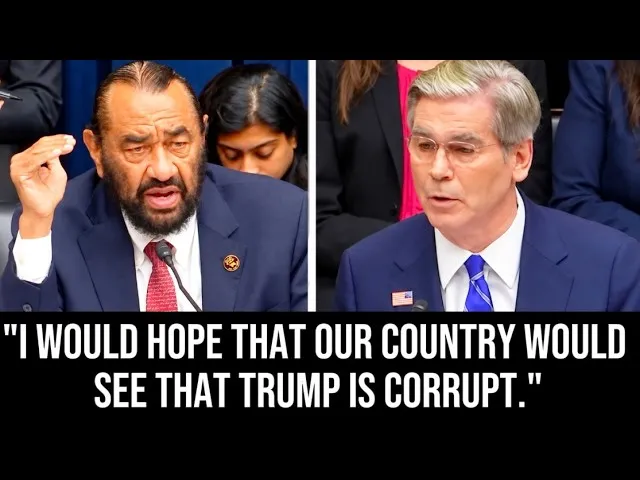
Video: WHOA: Al Green GRILLS Bessent over Trump's meme coin “scam”
You can order the same kind of articles for your own video to boost it on YouTube and Google. Just message the Telegram bot @sat_sit_bot. The bot writes and publishes the articles itself (with your YouTube video embedded) on popular topical websites (no ads). Free trial — 50 articles.
· based on the channel Daniel Reed
A meme coin is a crypto token with no product, cash flow or revenue behind it, valued only by what the next buyer will pay. The Senate hearing over Trump's token made that definition unavoidable: Senator Al Green pressed Treasury Secretary Scott Bessent on whether a sitting president should profit from a speculative asset, and Bessent answered by calling crypto the choice of an innovative administration while acknowledging its risks. For traders, the exchange is a useful case study in how political meme coins are structured, who ends up holding the bag, and what to check before buying any token that rides a headline.
What happened at the hearing over Trump's meme coin
Al Green used his time to frame the token as a scam and asked Bessent to explain how the Treasury views a president launching a speculative coin. Bessent did not deny the speculative nature of crypto; he argued that the administration supports the asset class and that buyers understand the risk. The exchange is short on technical detail and long on framing, which is exactly what makes it representative: political tokens are argued about as morality plays while their mechanics stay unexamined.
The hearing matters for meme coin traders because it puts a regulatory spotlight on a category that has lived mostly outside it. When a Treasury Secretary is asked on the record about a specific token, the question of disclosure, insider allocation and market manipulation stops being abstract.
How political meme coins are structured and who holds the supply
A political meme coin usually launches with a large share of the supply reserved for the issuer and affiliated wallets, a small float available to the public, and a price driven entirely by attention. That structure has three consequences every buyer should price in:
- Insiders can sell into retail demand without any earnings report or lock-up forcing disclosure.
- Liquidity is thin relative to the headline market cap, so exits move the price sharply.
- Value depends on continued news flow; when the news cycle moves on, the bid disappears.
Unlike a stock, there is no board, no quarterly filing and no claim on assets. Unlike a utility token, there is no network usage to measure. The only fundamental is demand, and demand for a political token is a function of the politician's visibility, not of any business.
Why critics call it a scam and what defenders say back
The scam argument rests on asymmetry: insiders get tokens cheap or free, retail buys at market price, and the issuer's promotional reach is far greater than any buyer's information. Critics in the hearing audience and online drew the obvious comparison to a Ponzi scheme, where early participants are paid by later ones, and to the idea that buyers are chasing access or favors rather than a return.
The defense is simpler: crypto is a risky asset class, buyers are adults, and suppressing it pushes activity offshore. Bessent's line in the hearing followed that logic, praising innovation while noting volatility. Both sides can be right at once, which is why the debate never resolves: the token can be a bad investment and still be legal, and it can be legal and still transfer wealth from late buyers to early ones.
The typical doubts traders raise about meme coin trading
The recurring questions from viewers of the hearing coverage cluster around a few themes. Is a meme coin the same as a Ponzi scheme? Not technically: a Ponzi pays old investors with new money through a central operator, while a meme coin is an open market where the transfer happens through price. Is it the same as a pyramid scheme? Closer in spirit, because returns depend on recruiting new buyers, but there is no formal downline or commission structure.
Other doubts are practical. Why do people buy tokens with no fundamentals? Because the holding period is often hours, not years, and the payoff is volatility rather than value. Why do insiders always seem to win? Because they set the supply schedule and see demand before the public does. Is buying a political token a form of support? Only in the sense that it transfers money to the issuer; it does not buy influence in any disclosed way. The honest answer to most of these is that the buyer is trading attention, and attention is the one asset nobody can reliably value.
What to check before buying any meme coin
Before buying a token tied to a person, a slogan or a moment, run a short checklist:
- Read the supply distribution: what percentage sits with the team, the issuer and early wallets.
- Check the liquidity pool size against the market cap; a large gap means you cannot exit at the quoted price.
- Look for lock-ups or vesting; if insiders can sell immediately, assume they will.
- Identify the venue: a token listed only on small exchanges has thinner depth and higher manipulation risk.
- Decide your exit before you enter, including the price at which you admit the thesis is dead.
This is risk management, not moral judgment. The same checklist applies to a dog-themed token and to a presidential one, and it is the only part of the trade a retail buyer actually controls.
What the hearing signals for meme coin regulation
A congressional exchange about a specific token raises the odds that disclosure rules for token issuers get discussed seriously, even if nothing passes quickly. The pressure point is not a ban; it is transparency about insider allocations and promotional activity. If issuers of political tokens are eventually required to disclose wallet distributions and sales, the category's economics change materially, because the edge insiders hold today depends on that information staying private. Until then, the market remains what the hearing showed it to be: a speculative arena where the loudest argument is about legitimacy and the quietest detail is who sells first.
The bottom line on meme coin risk
Meme coins are attention markets, and political tokens are the purest version of that: no cash flow, concentrated supply, and a price that lives and dies with the news cycle. The Senate exchange between Al Green and Scott Bessent captured the whole debate in a few minutes, but it did not change the mechanics, which still favor whoever sells into the crowd. Daniel Reed's breakdown of the hearing is a useful primer on how the argument is framed at the top and how little of it addresses the structure underneath. Treat any token launched by a famous name as a trade with a defined exit, not an investment, and size it accordingly.
Key takeaways
- Senator Al Green questioned Treasury Secretary Scott Bessent at a hearing over Trump's meme coin, calling it a scam.
- Bessent defended the token as the choice of a president who embraces innovation and warned about the risks of crypto.
- Meme coins have no cash flow, product or revenue and rely purely on the next buyer paying more.
- Political tokens concentrate supply with insiders, so retail buyers carry most of the downside.
- Viewer reaction split between calling the token a Ponzi scheme and blaming buyers for ignoring the risks.
Source: WHOA: Al Green GRILLS Bessent over Trump's meme coin “scam” · Markdown version
Questions & answers
Is a meme coin the same as a Ponzi scheme?
Not technically. A Ponzi scheme pools money with a central operator who pays earlier investors from later deposits. A meme coin trades on an open market, so losses come from price movement rather than a managed payout. The practical result can look similar when insiders sell into retail demand.
Why do people buy political meme coins at all?
Most buyers are trading attention and volatility over short holding periods, not valuing a business. Some also believe holding the token signals support for the figure behind it. Neither motive changes the supply structure, which still favors early and insider wallets.
What did Bessent say about Trump's token at the hearing?
He defended crypto as the choice of an administration that embraces innovation and acknowledged the asset class carries risk. He did not treat the token as a scam in the way Senator Al Green framed it, which is why the exchange drew so much reaction.
What should I check before buying a meme coin?
Look at how much supply the team and early wallets hold, the size of the liquidity pool versus the market cap, whether insiders are locked up, and which exchanges list the token. Then set an exit price in advance. If insiders can sell immediately, assume they will.